
Maximizing Flexibility in a Historic Tax Credit Project
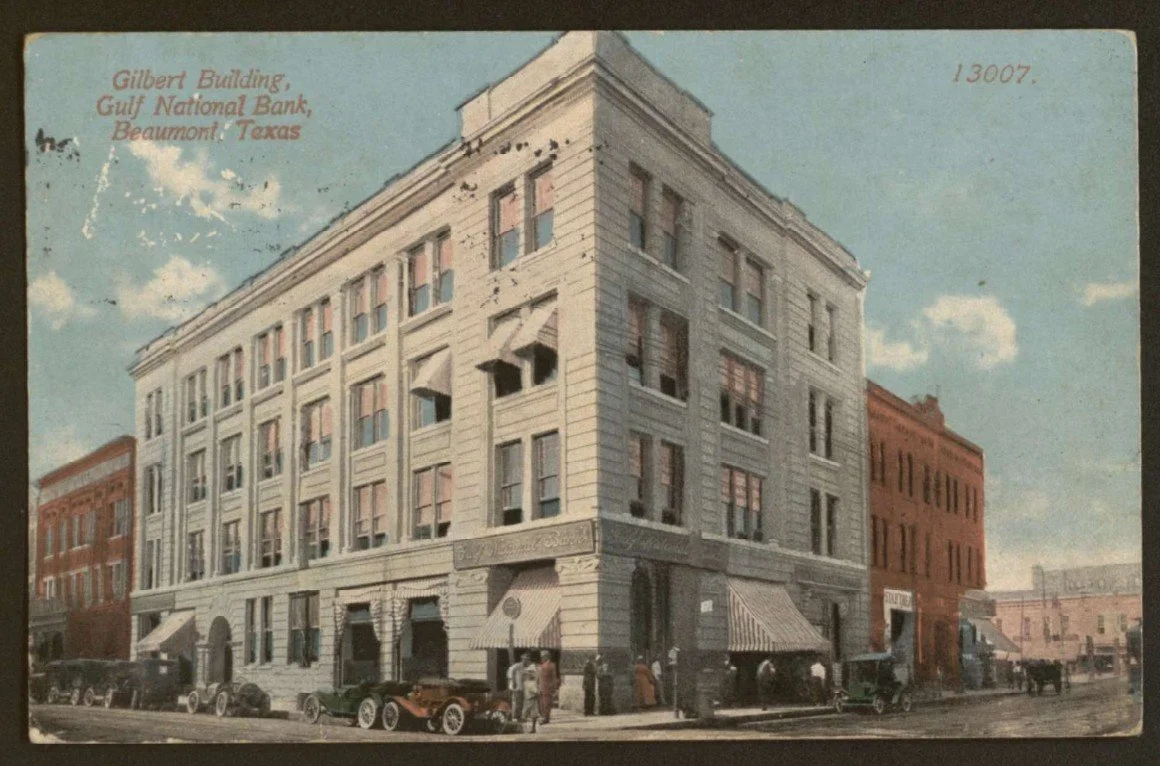
The Gilbert Building could be called the unluckiest building in Beaumont.
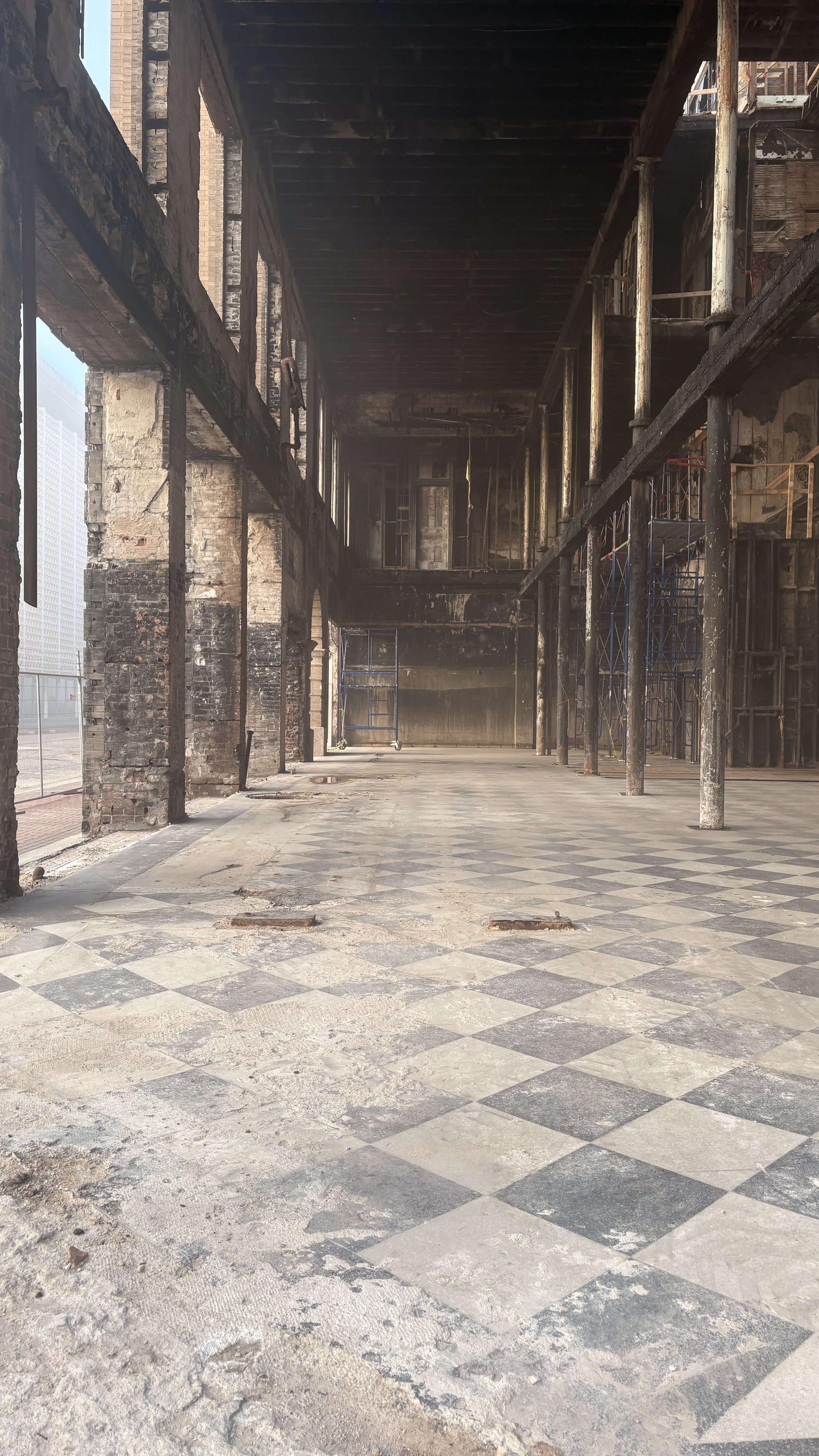
Unfortunately for such a beautiful example of Beaux Arts building stock from 1903, the four-story office building suffered three separate major fires, not counting the fire that destroyed its predecessor of the same name in 1901 on the same site.
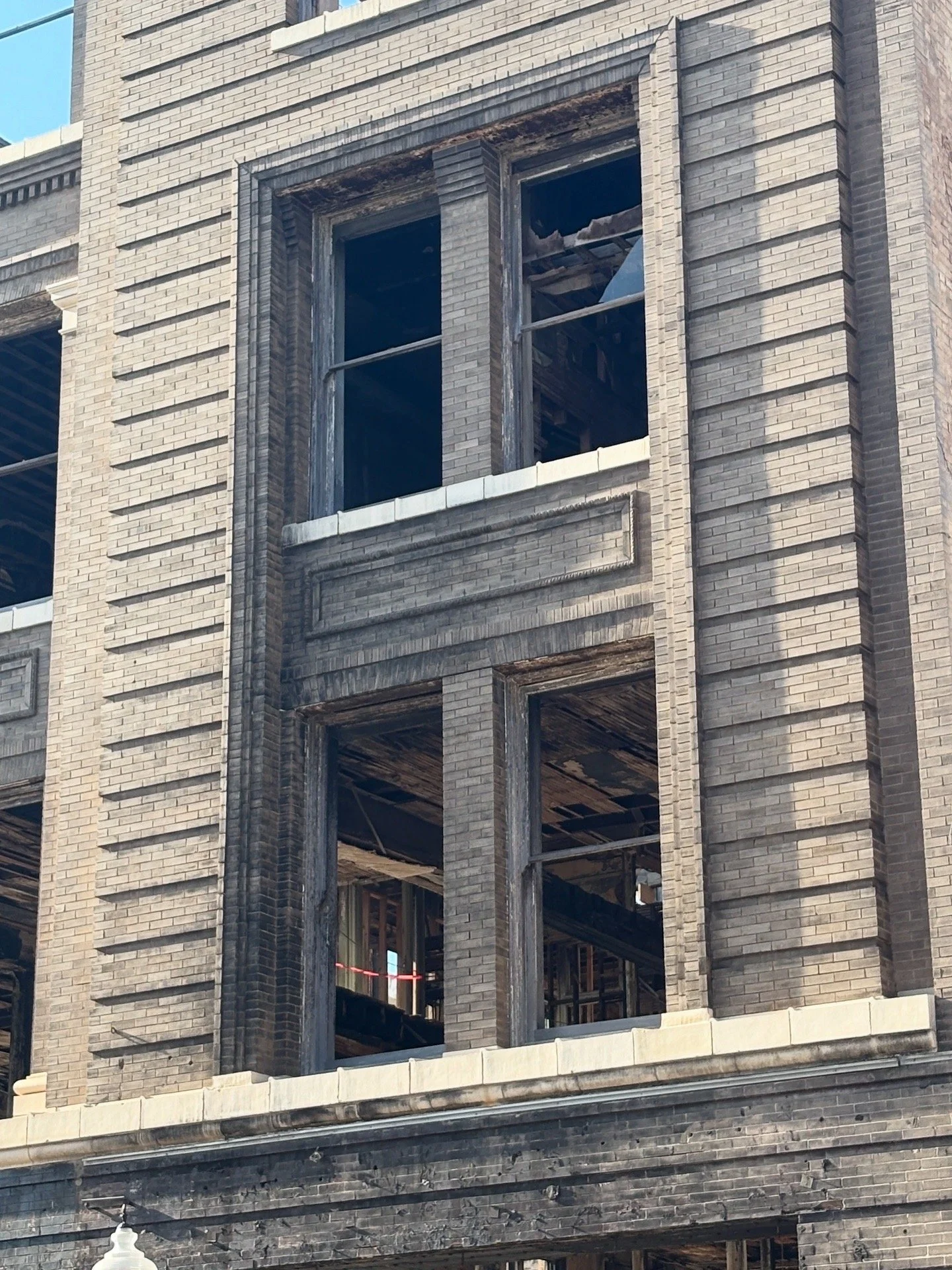
The latest fire gutted the majority of the interior and the roof, leaving the brick and terra cotta shell exposed in rainy downtown Beaumont. Fortunately, a neighboring engineering firm was watching from their offices as the city prepared to demolish the structure, and swooped in to save it.
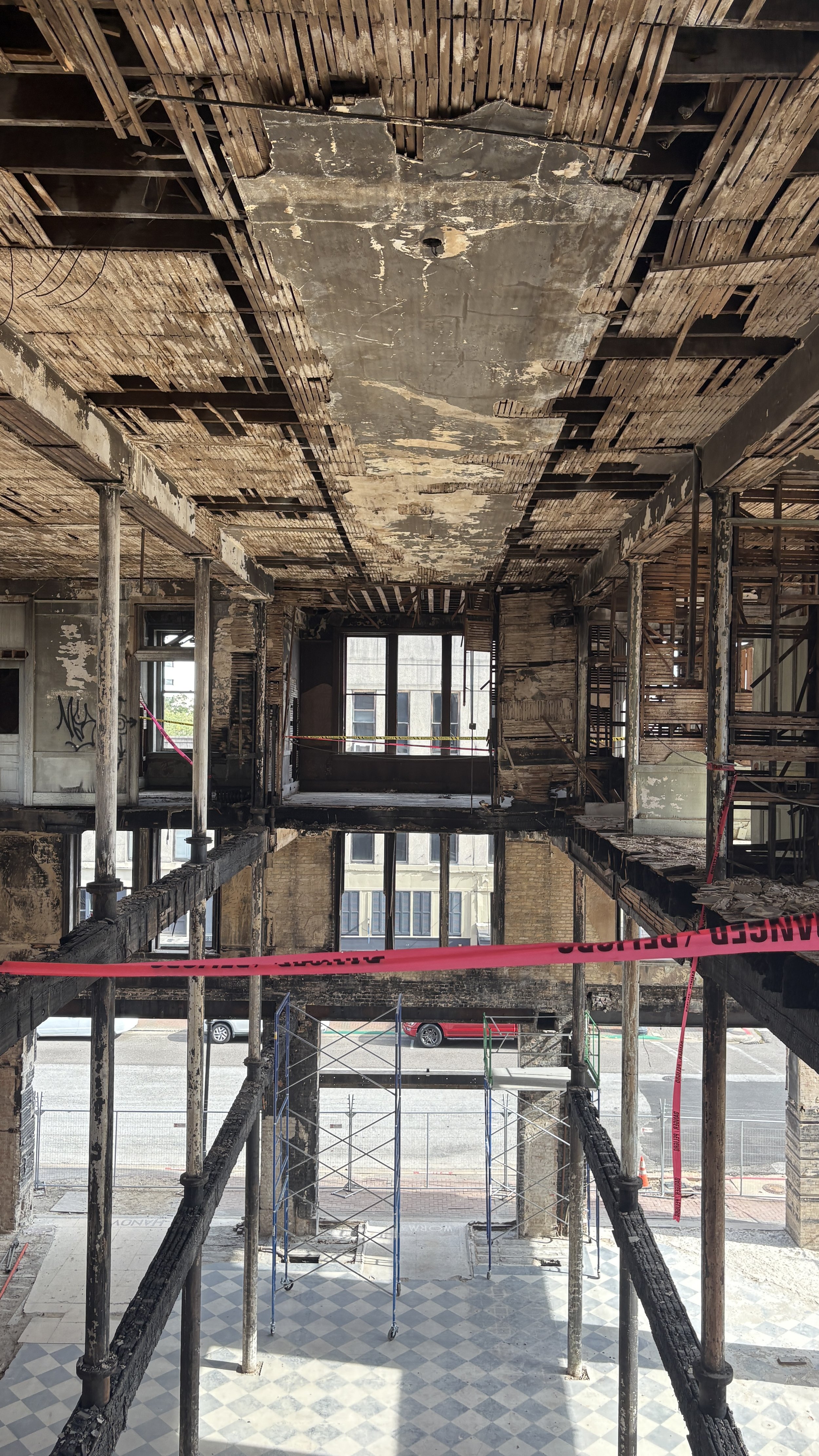
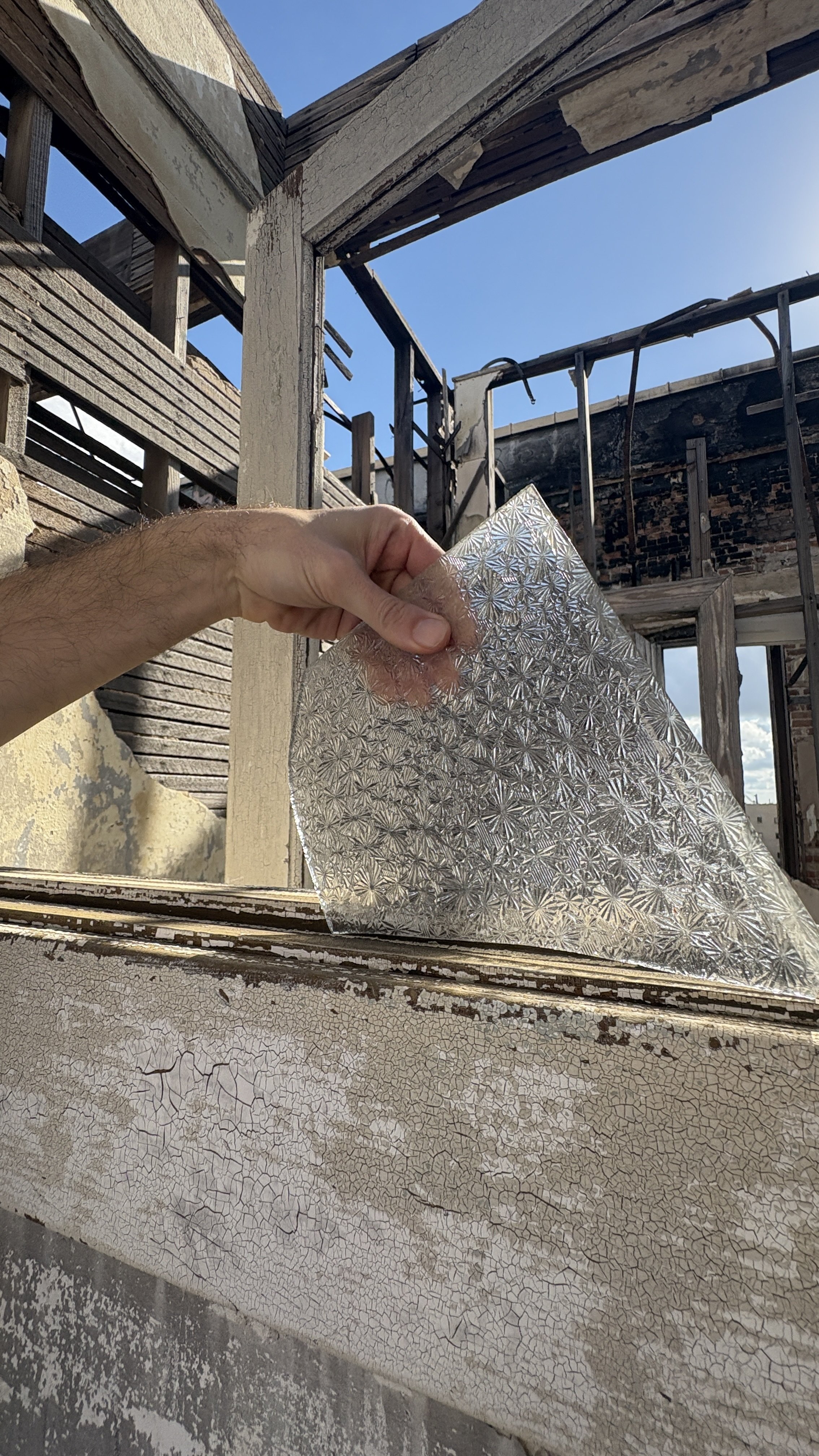
Now it will serve its next life as a fully occupied office building with ground floor mixed use spaces and become a new anchor of activity for the biggest city in Texas' Golden Triangle.
Historic Tax Credits will make this renaissance possible, a process which we are currently helping navigate, getting as many decisions reviewed and resolved before hammers swing and equipment is ordered.
The success of Historic Tax Credit projects lies in getting early answers to the right questions, and a track record of navigating the jungle of "appropriateness" as determined by those who hold the purse strings.
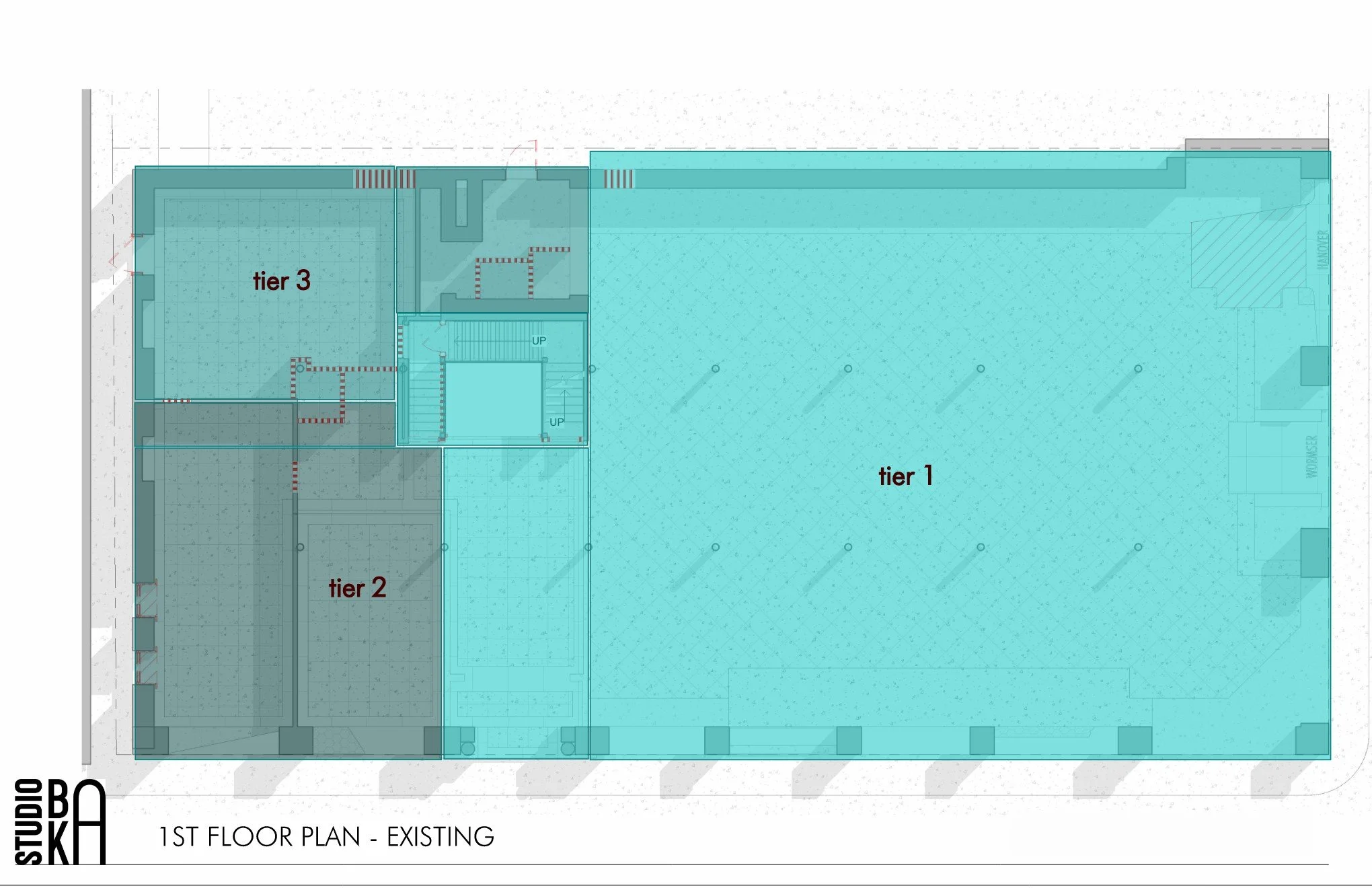
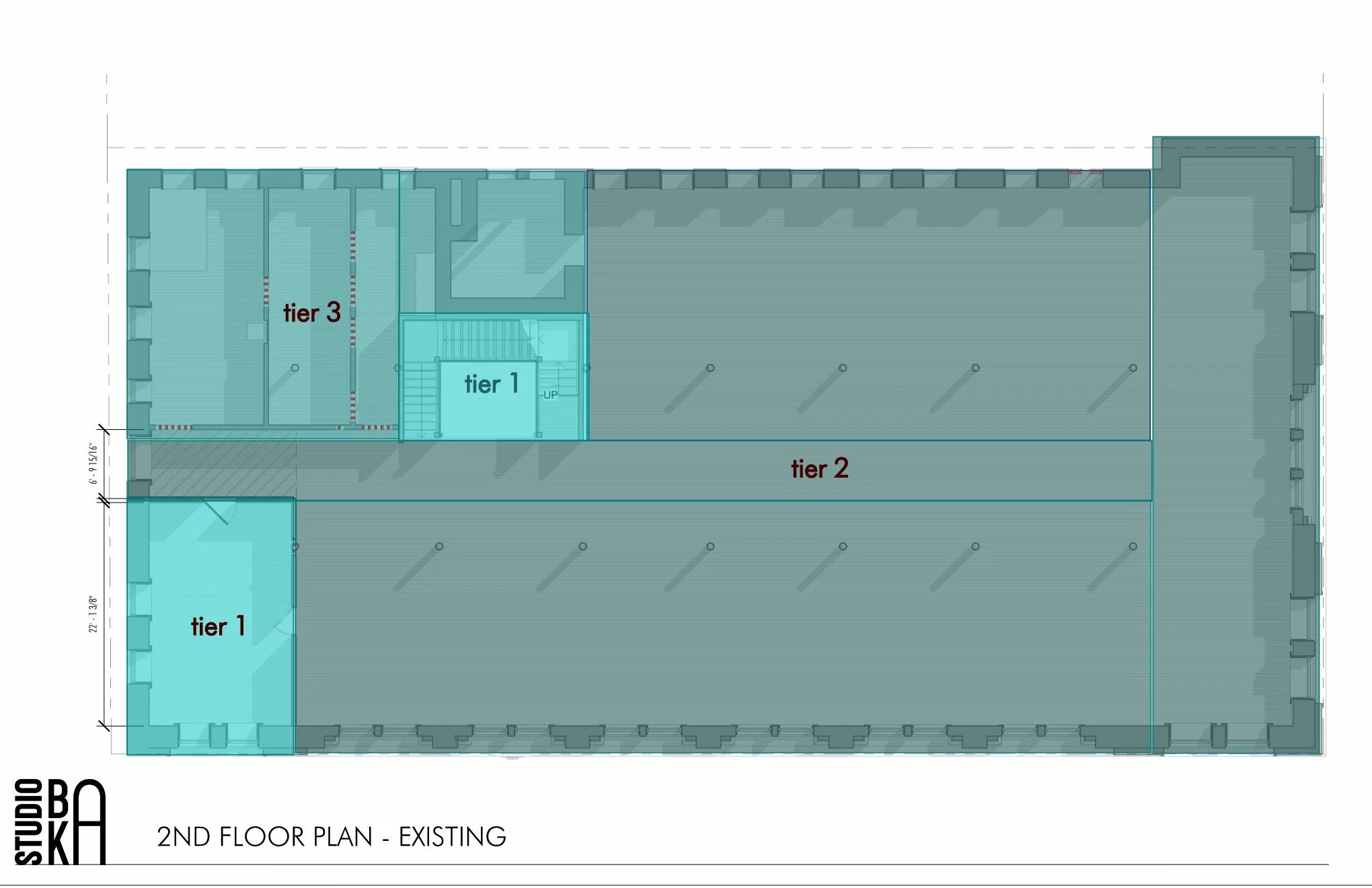
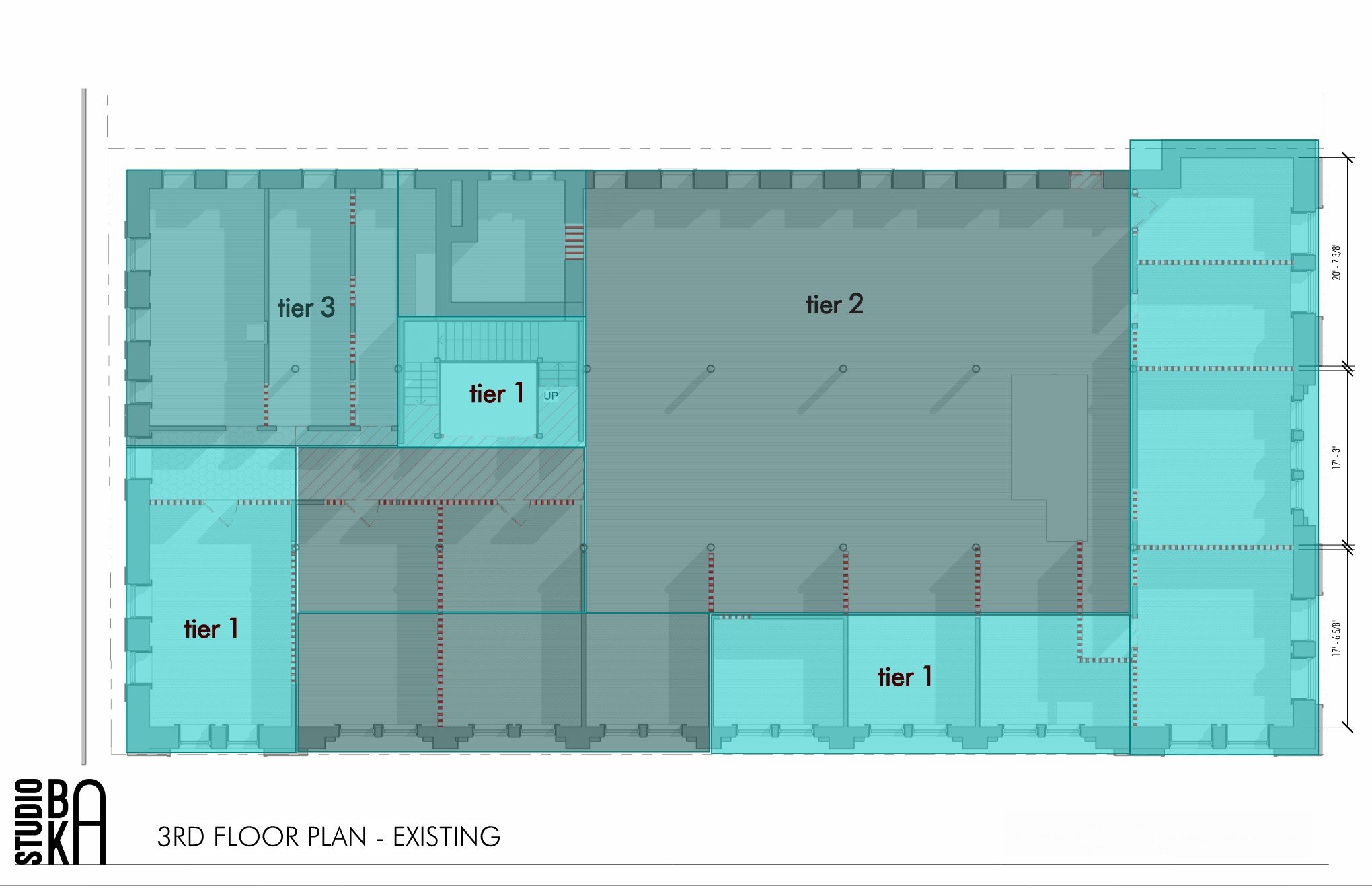
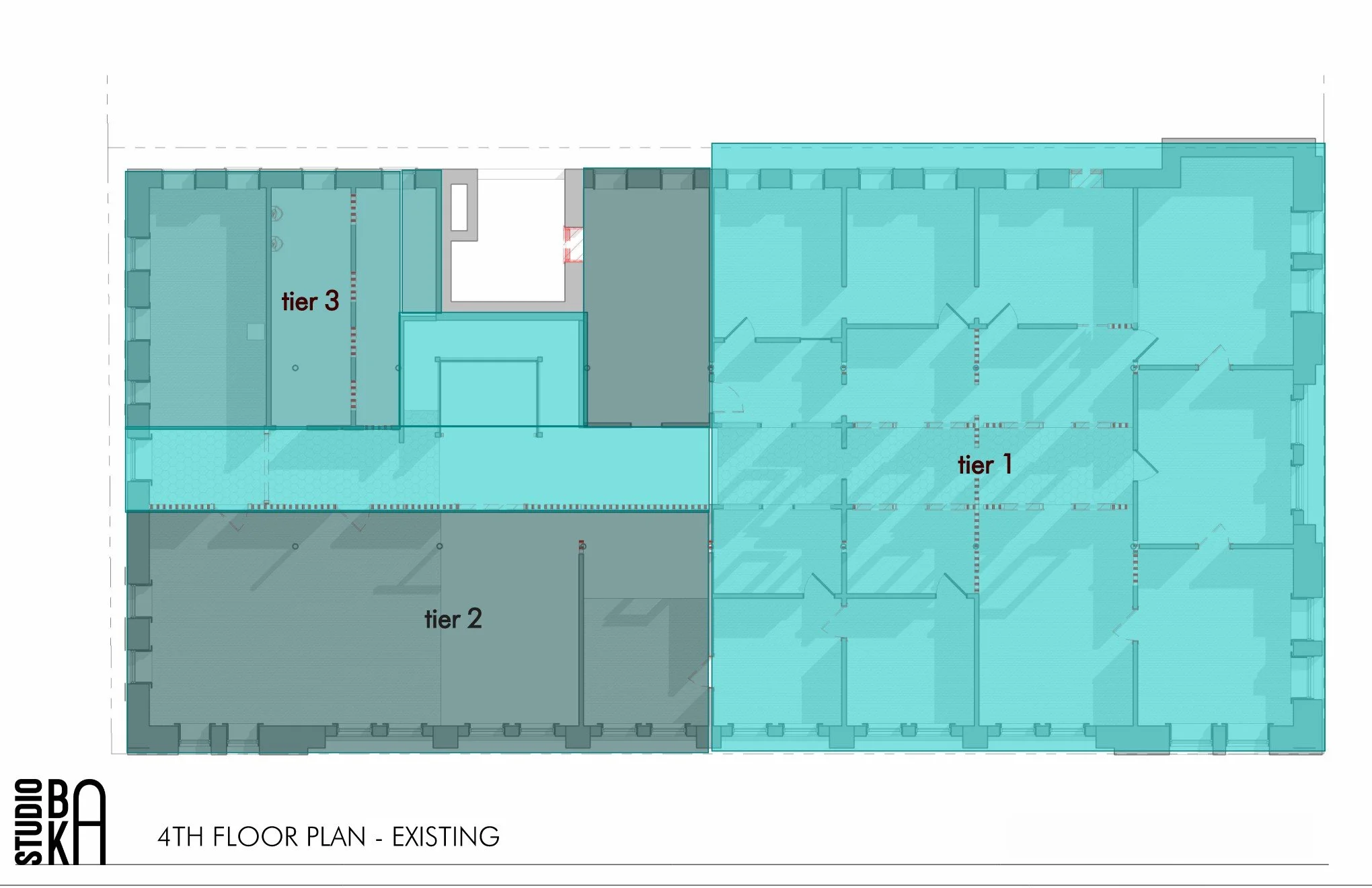
Our process starts with identifying what remains to preserve, and ranking its importance in the grand scheme using a three-tier system. Let’s break it down:
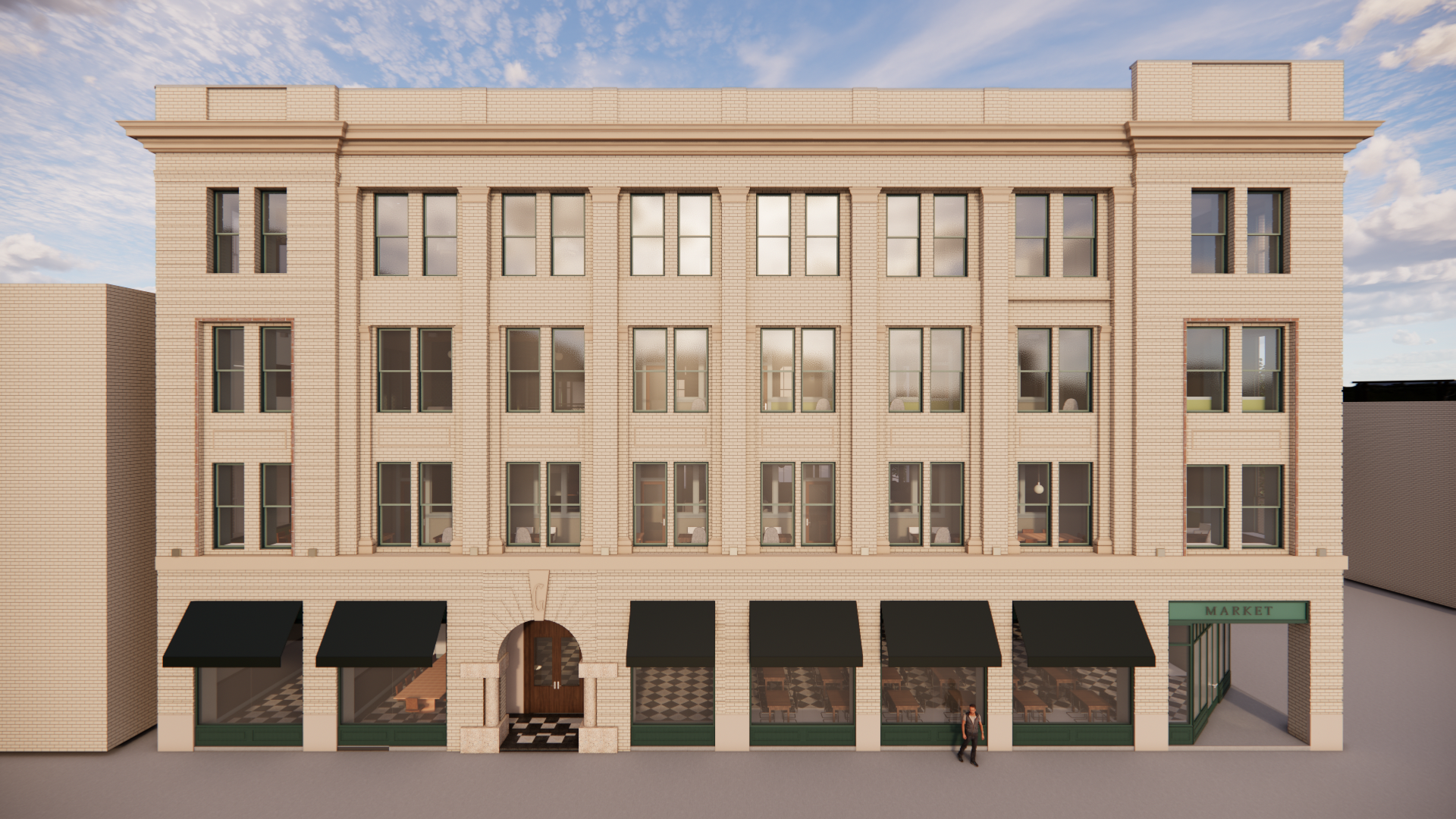
Studio BKA rendering of proposed restoration of Gilbert Building
Tier 1:
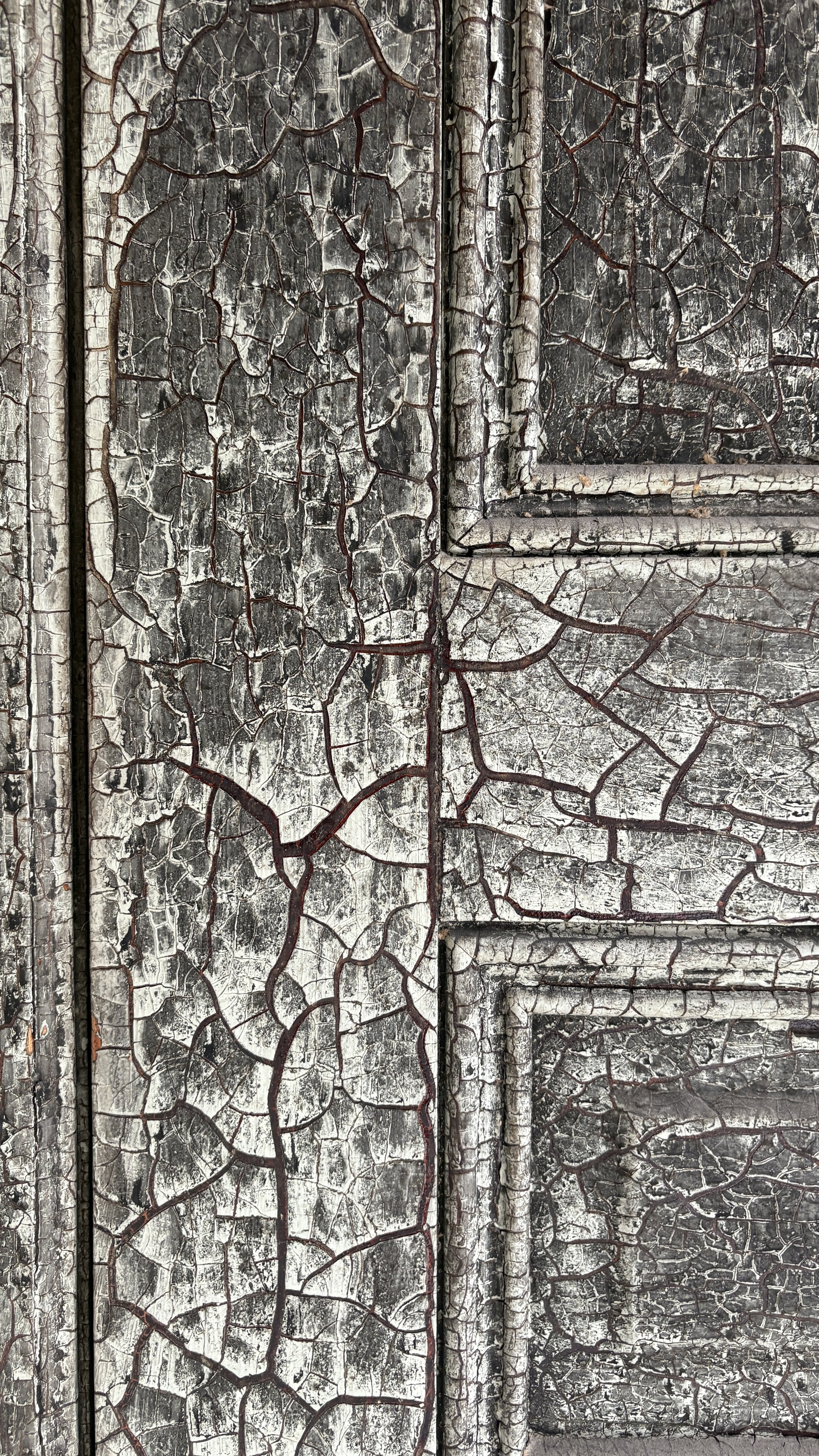
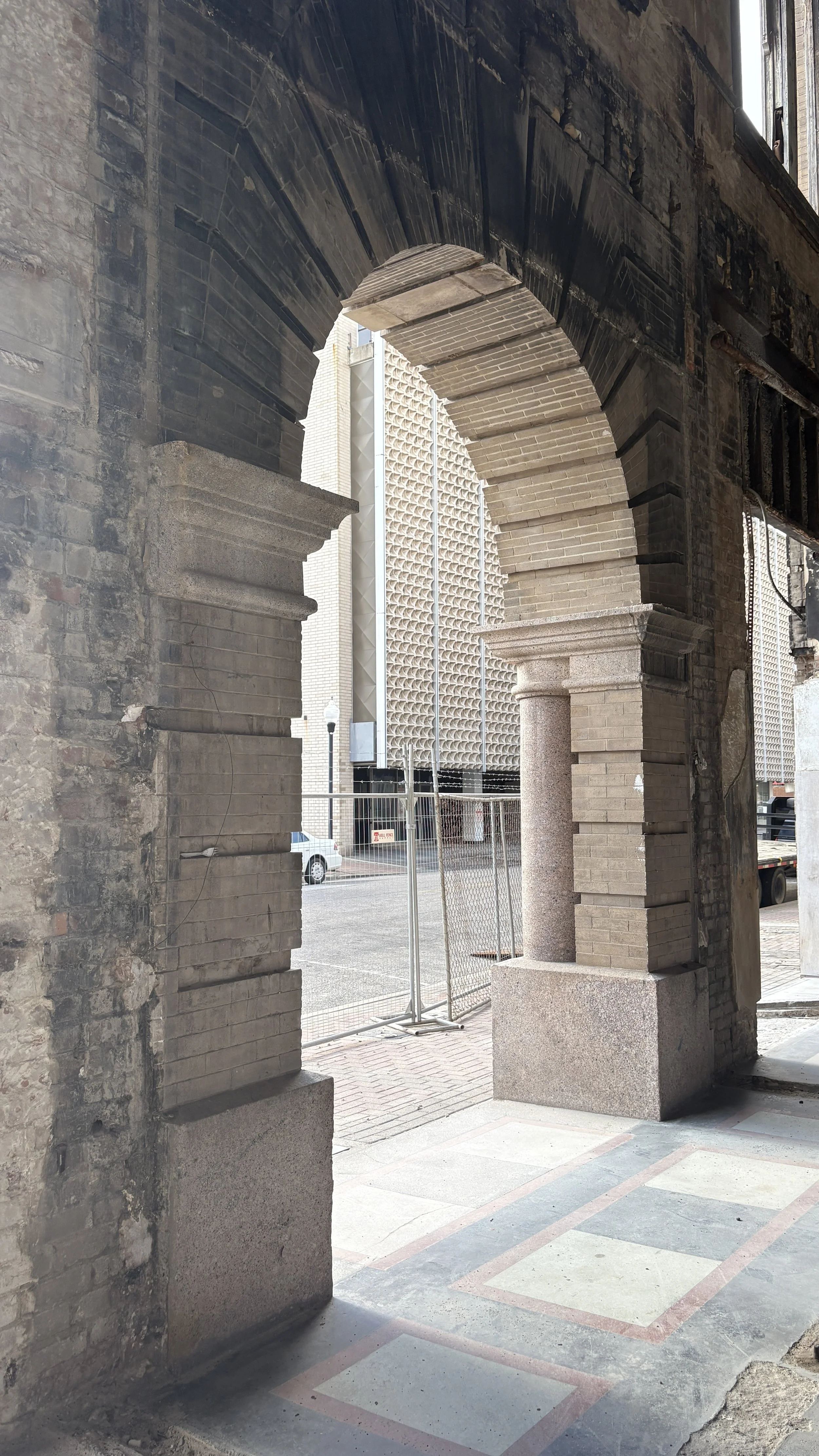
These spaces and elements have the highest historic value, meaning they are the most important parts or details of representing what the old building was, or they are the best remaining example of original material.
This involves literal preservation: wherever fabric remains the most intact, we try to preserve as best we can; or if it is too far gone, we document it and replace it in kind.
But equally as important is use preservation - a space that was traditionally used in a certain way should be aligned as closely with that previous use when it is a "Tier 1" level component.
A large gathering space should not be chopped up into small rooms, for example.
Tier 2:
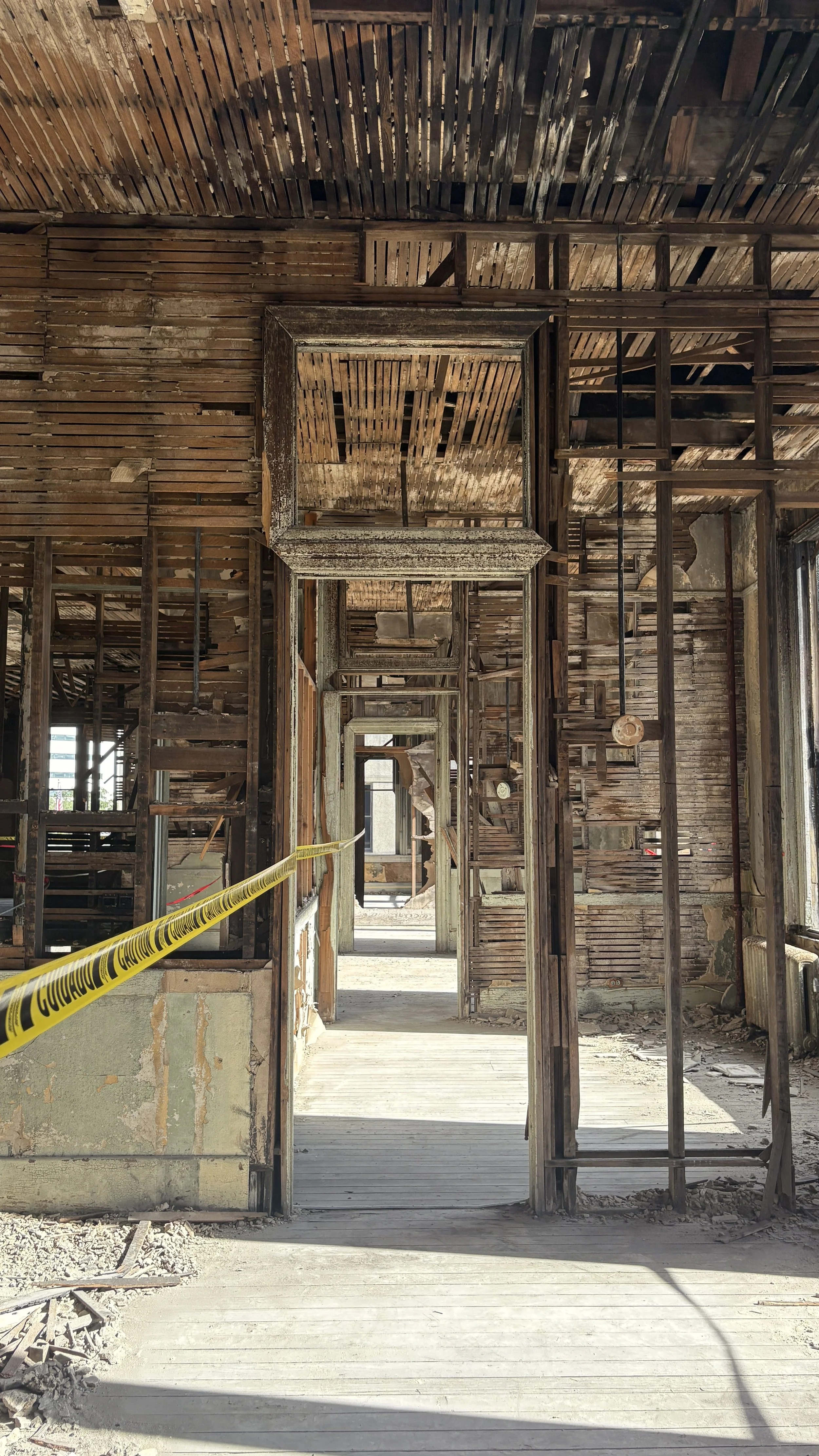
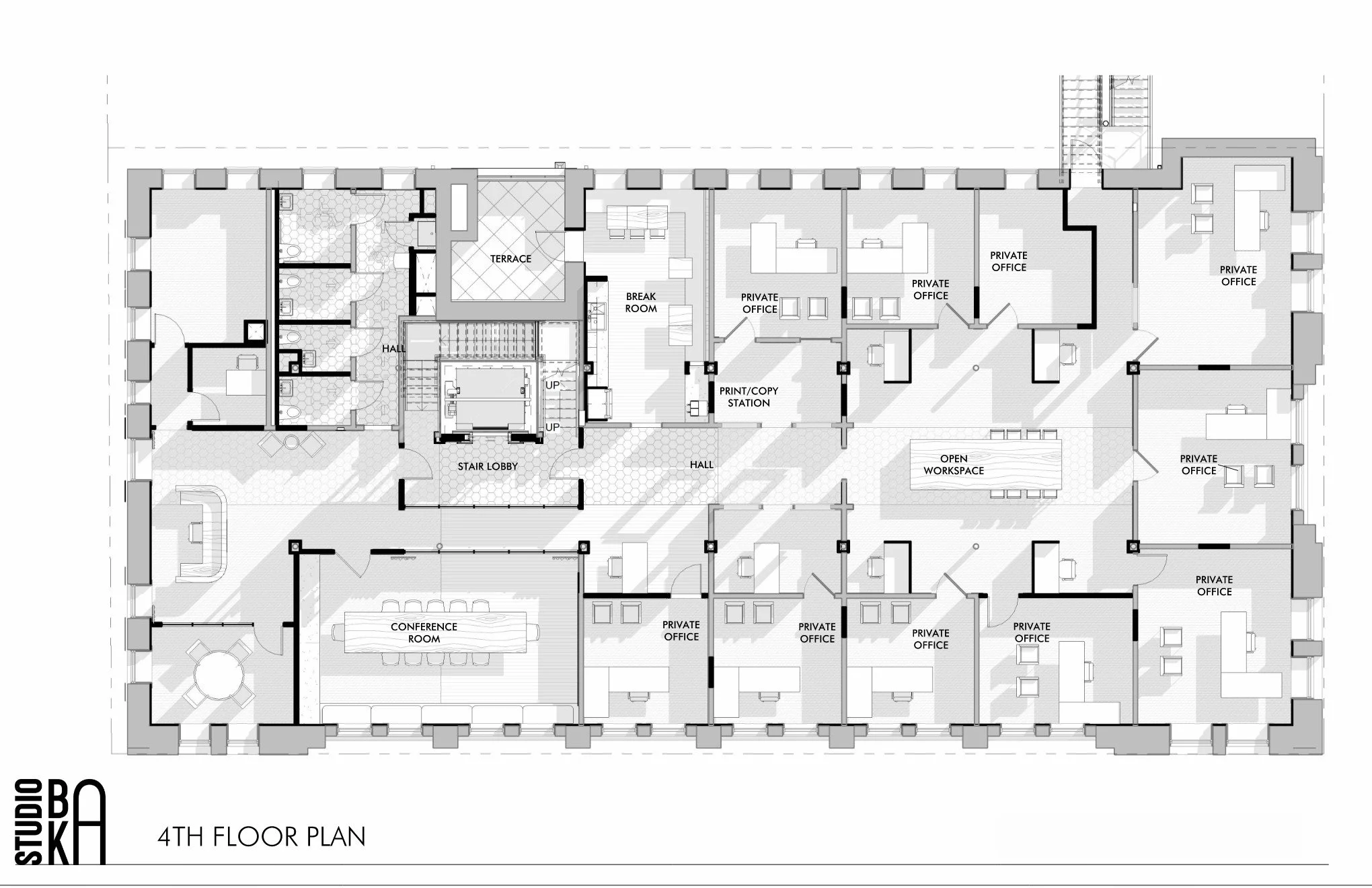
Sliding down the scale of significance, Tier 2 spaces are not of primary importance, but remain important public-facing pieces of the structure's history and use. These are just as tricky to get right, but can present opportunities to subtly introduce contemporary elements without compromising historic integrity. We restore what makes sense to restore, but we have a bit more freedom to increase or adapt functionality to modern needs.
Tier 3:
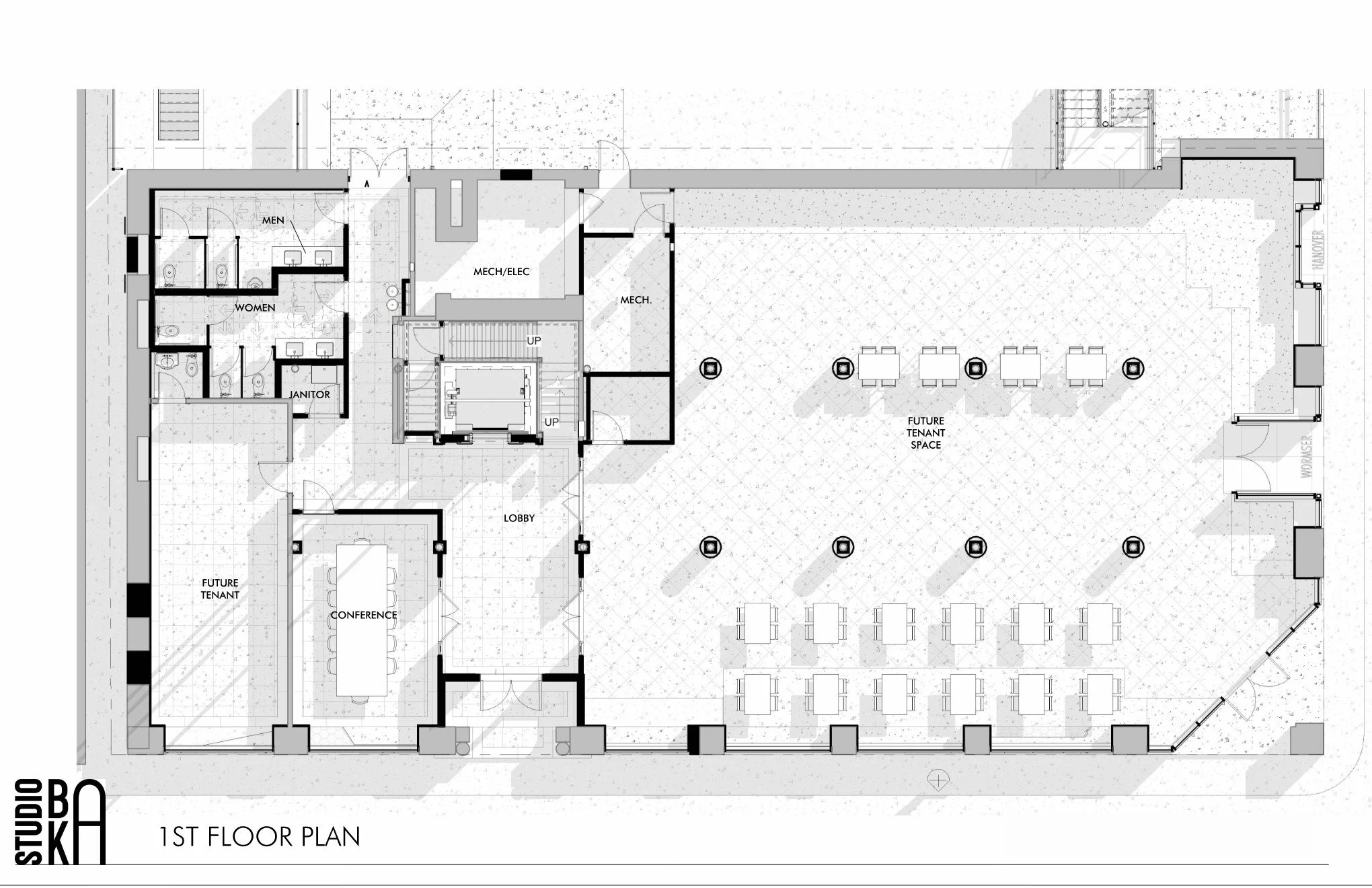
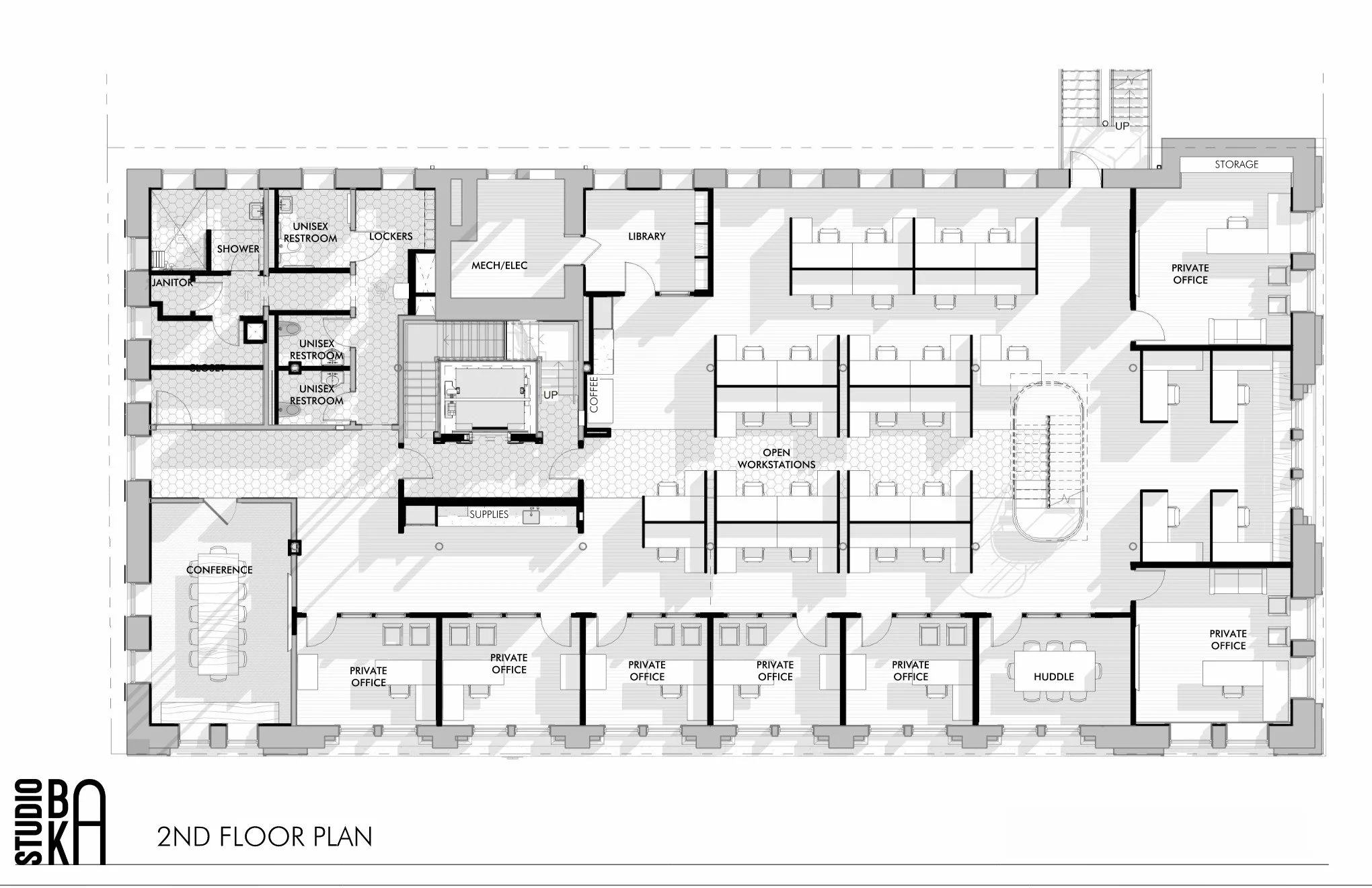
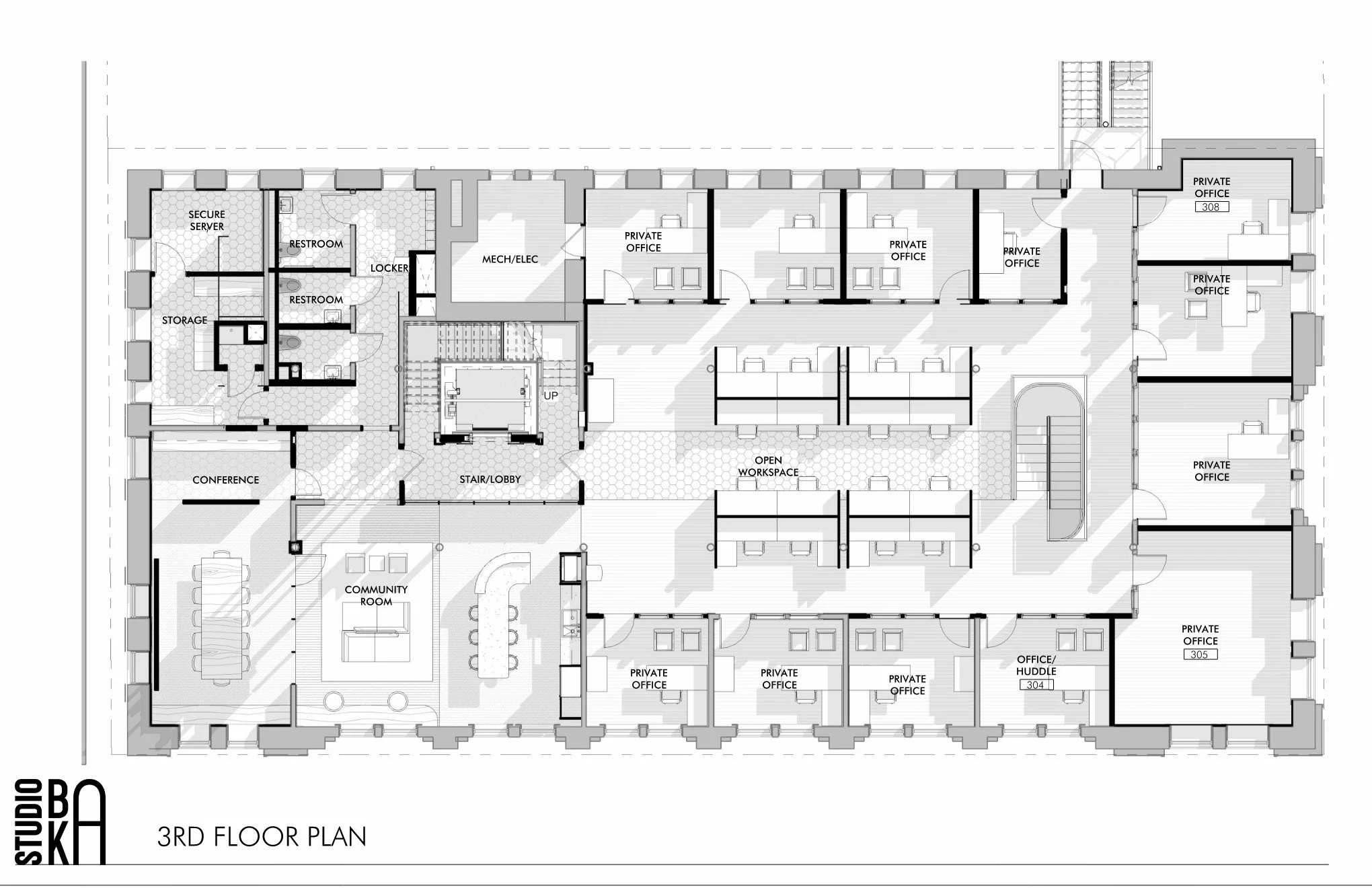
When spaces or items have already been irreparably altered, or if spaces were historically the less significant "back-of-house" type spaces (storage, bathrooms, etc). then we have greater design flexibility to upgrade, modernize, and alter.
While we still want these spaces to flow with the vibe of the building, we have more freedom to reference and play on themes, or use them for new types of equipment or facilities that older buildings aren't set up to accommodate (IT infrastructure, HVAC equipment, or accessible bathrooms).
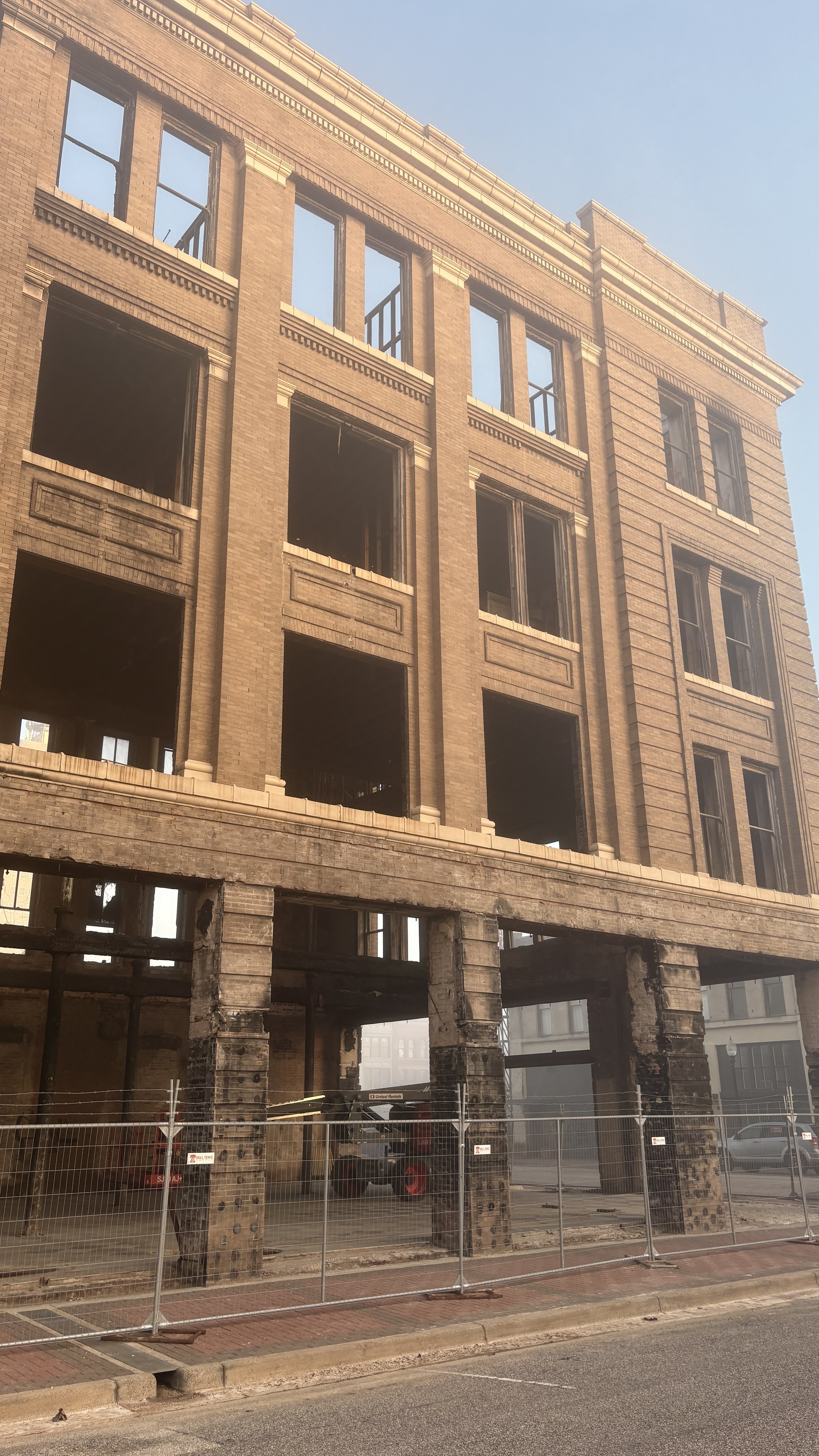
Exterior Restoration
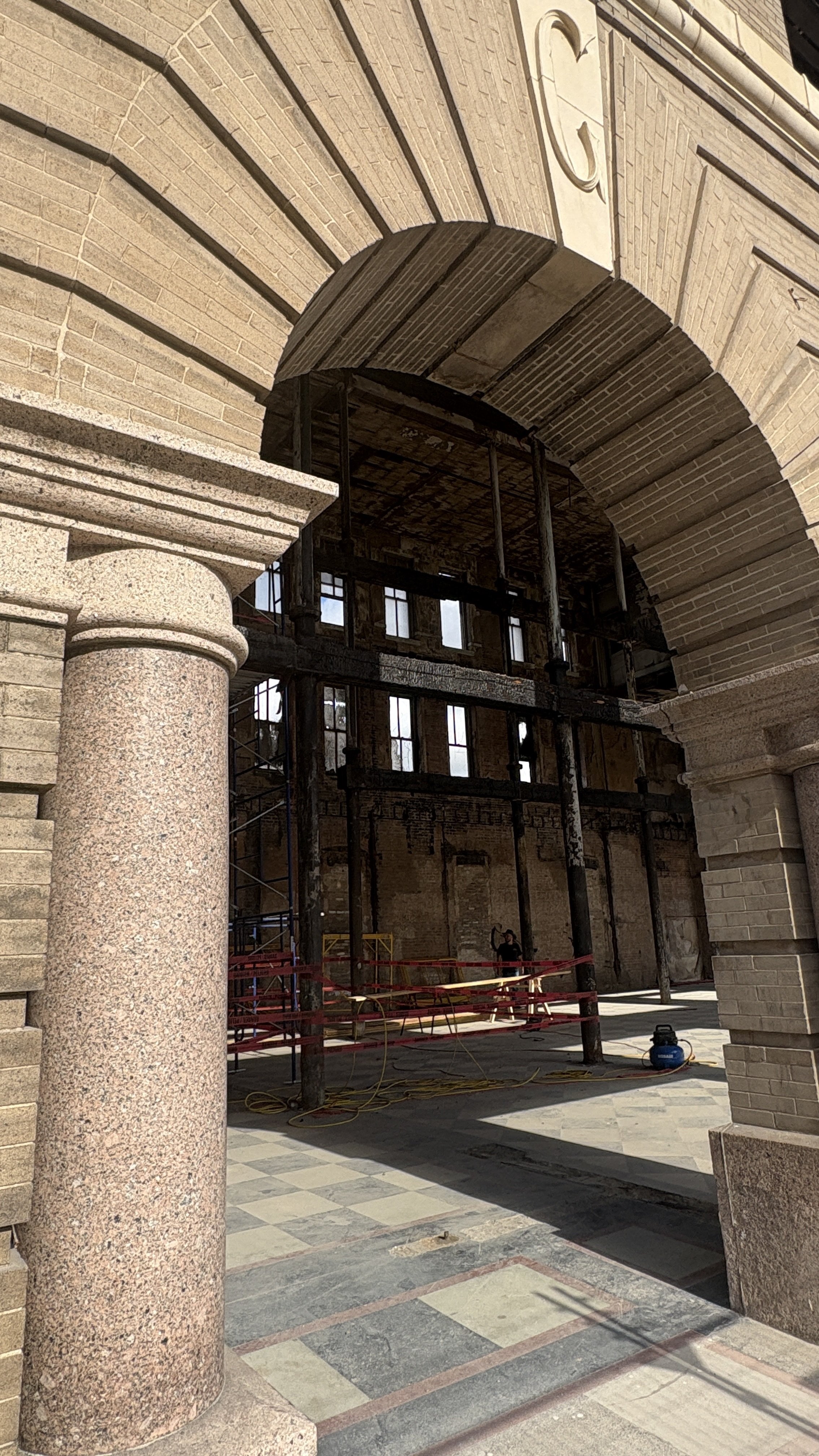
With the Gilbert Building, the exterior facade was clearly the Tier 1 component and the crux of the project's preservation scope. For the most part, it was made of original material and in good condition, but the ground floor facade had had new openings cut in, and multiple materials glued to it over its century of occupation by different tenants.
Our approach was to restore original material, but identify those portions that had been modified with a modern interpretation that would be clearly of this time but not detract from the original details. Historic guidelines often encourage a clarity between preservation work and non-original interventions, either new or ill-advisedly done over the years.
These "tiers" are key to identify early so that you can use them as tools to get what you need and want out of the project.
Historic guidelines then cease to be constraints, and become opportunities to make stronger design decisions that require creativity and an open-mind.
This ultimately leads to a more successful project - one that preserves history and gives new life to a structure, which is the ultimate goal of the Historic Tax Credit program. Let us help you turn your constraints into opportunities for success!
TLDR:
The success of Historic Tax Credit projects comes down to making the right decisions early. By identifying and ranking building elements into three tiers—what must be preserved, what can be adapted, and where flexibility exists—we turn regulatory constraints into a clear design strategy. This approach streamlines approvals, protects what matters most, and creates opportunities to thoughtfully integrate modern functionality—ultimately delivering a more viable, high-performing project.